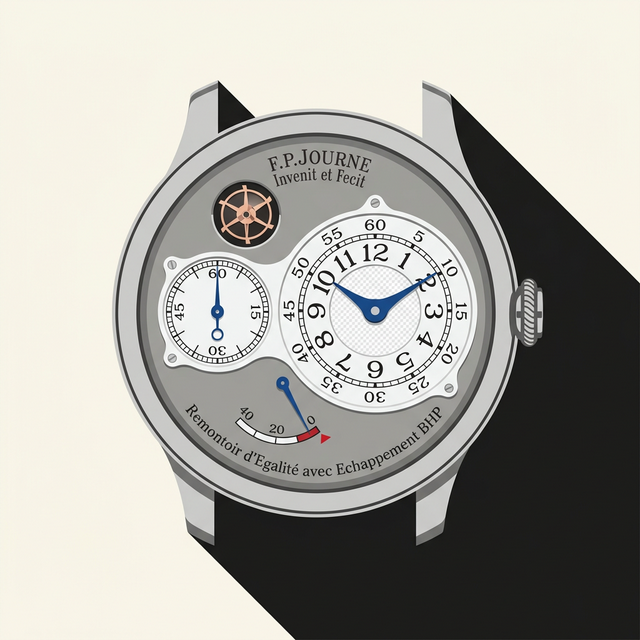
There is a line of Latin on the dial of every F.P. Journe watch, set in a script small enough to miss: Invenit et Fecit. Invented it, and made it. Not assembled. Not finished. Not "manufactured in collaboration with." Invented, and made. It is, depending on who you ask, either the most arrogant sentence in watchmaking or simply the most honest one.
We think it's the second. And this summer, for the first time in eleven years, it's the reason we made something specifically for the people who already know that name by heart.
The man who signs his work.
François-Paul Journe was born in Marseille in 1957. Before he built watches he restored them, antique clocks, pocket pieces, the kind of mechanisms most people only see behind museum glass. He learned the craft backwards, from the inside of broken things, which may be why he understands it better than people who only ever learned to put new ones together.
He sold his first series by subscription, twenty pieces, paid for in advance by collectors who believed in a watch before there was a watch to hold. In 1999 he opened the maison in Geneva. Today it makes fewer than a thousand watches a year, for the entire planet, built by a team you could fit in a single room.
The dial does the talking, everything else stays quiet.
Gold where no one looks.
Here is the flex you'll never see on the wrist. For two decades, Journe has built his movements, the engine, the part hidden forever behind the caseback, in solid 18-karat gold. Not the case. The movement. A material chosen for its stability and its warmth, on the one side of the watch almost no one will ever look at. That is the entire personality of the brand in a single decision.
The mechanics are the same kind of stubborn. The Chronomètre à Résonance runs two balance wheels side by side until they find each other through sound and begin to beat in sympathy, each one steadying the other, physics that most brands are content to quote in a brochure, and that Journe simply put on a wrist. The remontoir d'égalité rewinds a tiny spring every second so the escapement is fed an even dose of power, which is why a Journe keeps the same time on day five as it did on day one.
The Optimum.
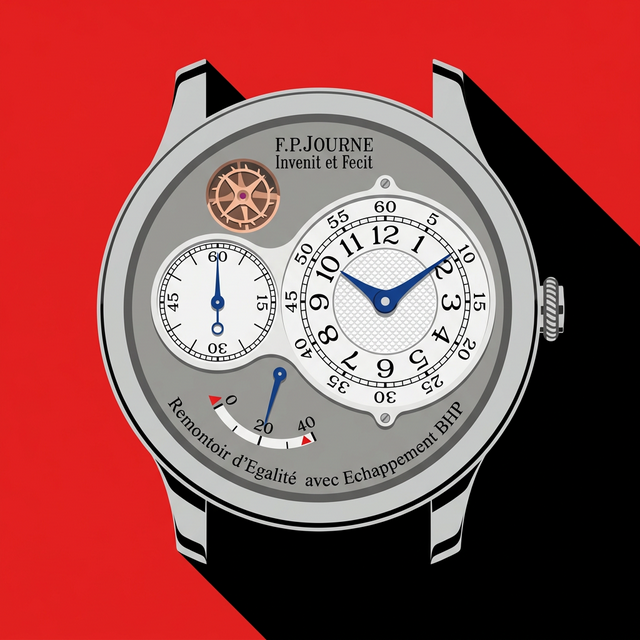
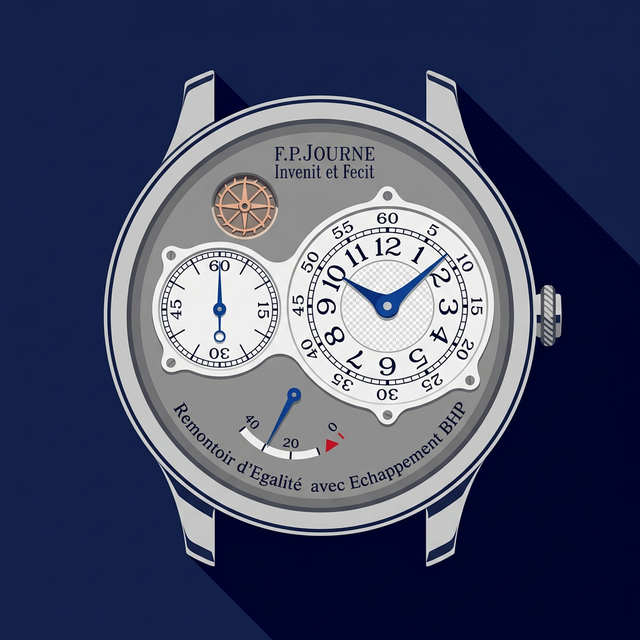
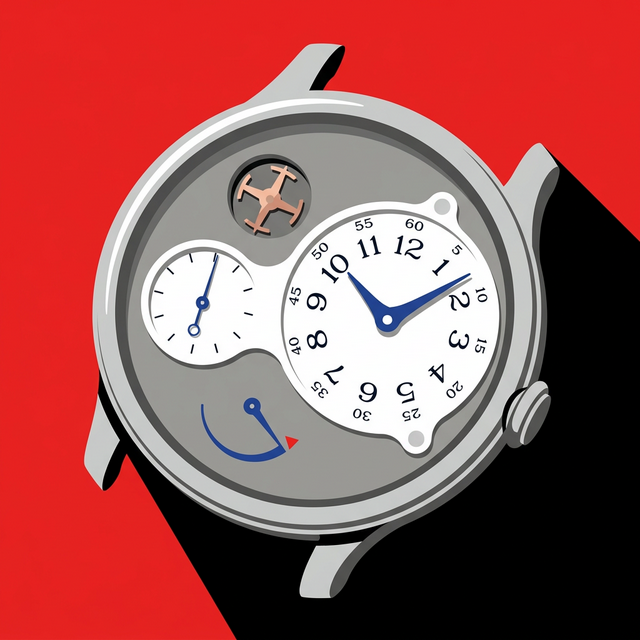
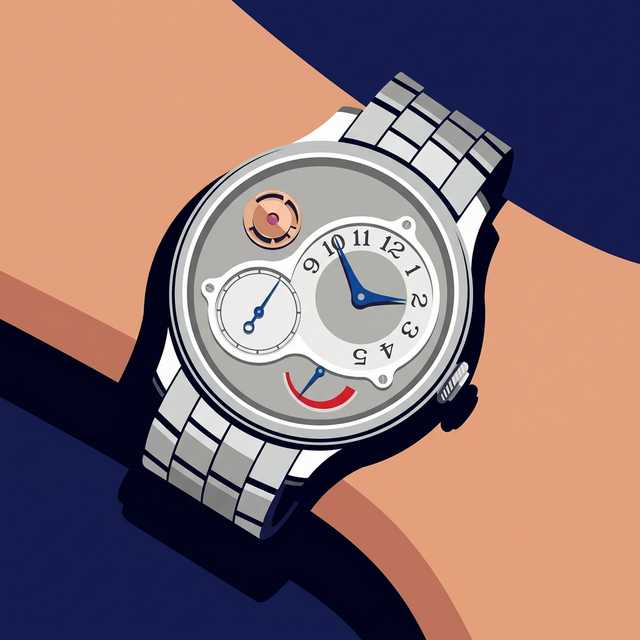
The watch in these drawings is the Chronomètre Optimum. Read the dial and it tells you exactly what it is: Remontoir d'Égalité avec Échappement EBHP. A constant-force remontoir, feeding a high-performance escapement Journe designed himself, his attempt at, the name is not modest, the optimum chronometer. A natural dead-beat seconds. A power-reserve hand that warns you it's getting tired long before it ever loses a beat.
It does not shout. Steel case, restrained dial, a movement of gold facing the floor. You could wear it to a funeral or a board meeting and the only people who'd clock it are the two or three in the room who'd have done the same.
Why the faithful are the way they are.
Put it together, fewer than a thousand watches a year, an independent house with no group above it pushing volume, and a design language built entirely around restraint, and you understand the particular madness of the people who collect them. The understatement is the status. The ones who know, know. Everyone else sees a plain three-hander and moves on, which is precisely the point and, quietly, the joke.
Owning one is less a purchase than an allegiance. And allegiances, in our experience, like to be worn.
Which brings us to the point.
Leopine has always dressed for the watch on your wrist. Eleven years of shirts and swim shorts and tees for people whose group chats are eighty percent wrist shots and twenty percent "still available?". We've made pieces in the spirit of a lot of watches. We've never made one for Journe.
That changes this summer. Our first piece for the Journe faithful is a tribute, never a replica, never a counterfeit, just a quiet nod between people who recognise the same two words. If you know what Invenit et Fecit means without translating it, this one's for you.
For the Journe Faithful
A tribute to the watchmaker who signs his work. Limited, numbered, and made the only way we know how, in Barcelona, properly. Join the list and you'll be the first wrist to know.
Invented, and made.
We can only promise you the second half.
Leopine